

In the world of industrial maintenance, there is a common saying: "Industrial maintenance doesn't stop for the weather, but equipment sometimes does."
Whether you are performing a turnaround in the sub-zero wind chills of the North Slope or managing a refinery expansion in the 115°F (46°C) heat of the Permian Basin, your portable gas monitoring equipment is your most critical lifeline. However, these devices—packed with sensitive electrochemical sensors, lithium-ion batteries, and liquid crystal displays—are not invincible.
When the mercury hits the extremes, the hardware often hits the wall. Here is a look at the "hidden" failures of environmental extremes on gas monitors and how to keep your fleet in the fight.
1. The Deep Freeze: Why Cold Kills Performance
When temperatures drop below -20°C (-4°F), the laws of chemistry and physics begin to work against your gear.
- The Battery Blues: Lithium-ion (Li-ion) batteries rely on the movement of ions through a liquid electrolyte. In extreme cold, this electrolyte becomes more viscous, slowing down the chemical reactions. This leads to a massive voltage drop and a significant reduction in capacity—sometimes by as much as 50%. Your "full" battery might suddenly show a "Low Battery" warning just an hour into a shift.
- The Frozen Display: Most portable units utilize Liquid Crystal Displays (LCDs). As the name implies, these screens rely on liquid crystals that change orientation to show data. In extreme cold, these crystals become sluggish, causing "ghosting" or a complete freeze. In critical moments, a sluggish display can make real-time readings unreadable, delaying life-saving decisions.
2. The Desert Heat: The Silent Killer of Hardware
High-heat environments (above 40°C / 104°F) present a different, often more permanent, set of problems.
- Battery Swelling (Pillowing): Continuous charging cycles in high-heat environments are a recipe for disaster. Heat accelerates the decomposition of the internal electrolyte, generating gas that has nowhere to go. This causes the battery to swell—a phenomenon known as "pillowing"—which can crack the device's casing and compromise its IP (Ingress Protection) rating.
- Accelerated Aging: For every 10°C increase above room temperature, the rate of battery degradation roughly doubles. In desert operations, this leads to premature fleet replacements, as batteries that should last 2–3 years fail in less than 12 months.
Maintenance Focus: If a battery feels warm to the touch before use or if the device casing appears slightly "bowed," the battery has likely begun to swell. Stop use immediately. A swollen battery is a fire hazard and a sign of internal chemical distress.
3. Compliance and Standards: The Regulatory Backstop
Maintaining equipment in extreme weather isn't just a "good idea"—it’s a regulatory requirement.
- OSHA SHIB 09-30-2013: OSHA's Safety and Health Information Bulletin on Calibrating and Testing Direct-Reading Portable Gas Monitors notes that sensor response varies with temperature and humidity. It recommends calibrating sensors in conditions as close to the actual workplace environment as possible.
- ANSI/ISEA 104-1998 (R2009): This standard provides guidelines for the selection, use, and maintenance of portable gas detectors, emphasizing that devices must be used within the manufacturer's specified temperature range to remain "Intrinsically Safe."
4. Best Practices for Mitigation
To ensure your equipment remains as resilient as your crew, implement these mitigation strategies:
For Extreme Cold:
- The "Coat Pocket" Protocol: Keep monitors inside a heavy parka or close to the body when not actively taking a reading. Body heat can keep the battery and LCD within their optimal operating range.
- Acclimatization: If a monitor will be used for more than 20 minutes in the cold, allow it to sit in the ambient air for 15 minutes before "Zeroing" the sensors. This ensures the temperature compensation circuitry is aligned with the actual environment.
For Extreme Heat:
- The "No-Vehicle" Rule: Never leave gas monitors in a parked vehicle. In 100°F weather, a car's interior can reach 150°F+ in minutes—well above the "thermal runaway" threshold for many Li-ion batteries.
- Smart Charging: Only charge devices in climate-controlled areas. Charging a battery that is already hot from the field significantly increases the risk of swelling.
5. Procedural Implementations
Beyond hardware tweaks, your SOPs (Standard Operating Procedures) should adapt to the weather:
- Rotational Fleet Strategy: In extreme weather, implement a "one-in, one-out" rotation. While one set of monitors is in the field, a second set is in a climate-controlled "warm zone" (or "cool zone") ready to swap halfway through the shift.
- Increased Bump Testing: Sluggish sensors in the cold may pass a self-test but fail to react quickly to a gas spike. Increase the frequency of Bump Tests (functional checks) to ensure the sensors are still responsive despite the environment.
- Storage State of Charge (SoC): If equipment is being "wintered" or stored during a hot off-season, keep batteries at 40–60% charge. Storing them at 100% in extreme heat significantly increases the rate of chemical breakdown.
Industry consensus standards, such as those published by the International Organization for Standardization (ISO) or American National Standards Institute (ANSI), often reinforce the need for periodic sensor verification (bump testing) and full instrument calibration to maintain safety certification.
In essence, any standard requiring the use of gas detection instruments implicitly requires that those instruments are accurately calibrated to protect workers from exposure to hazardous atmospheres.
Looking Ahead
As we move further into 2026, many manufacturers are beginning to integrate Low-Temp OLED displays and LiFePO4 (Lithium Iron Phosphate) batteries, which offer much higher thermal stability than traditional Li-ion cells. Investing in this next-gen hardware can drastically reduce the maintenance burden of environmental extremes.
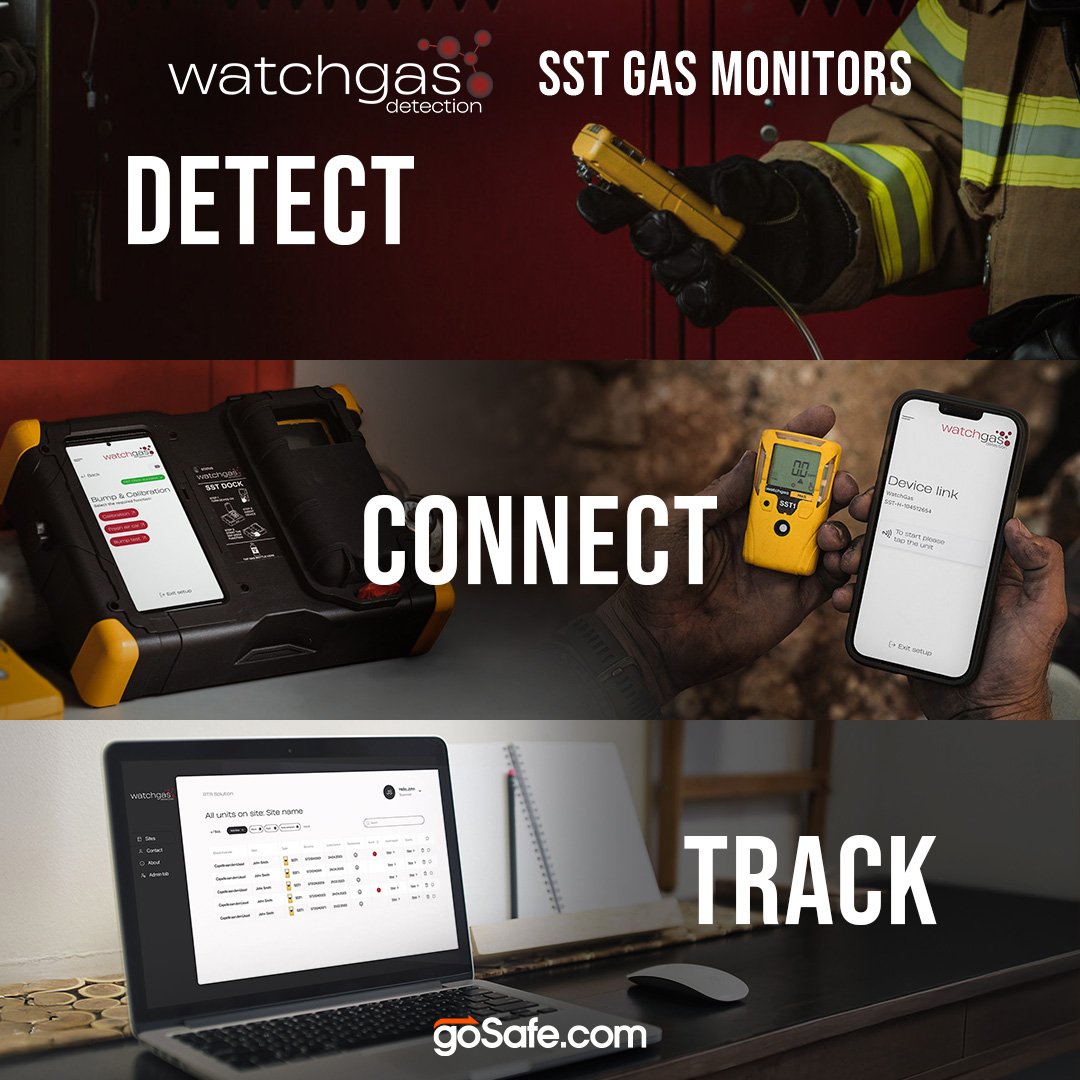
goSafe offers a wide variety of Instrumentation suitable for every task related to gas detection. goSafe also offers and Instrumentation Management program. We can help keep your monitors working properly with warranty, repair, calibration, and recertification services. We'll even handle inventory and shipping. Contact Us for more information or for any questions related to safety and safety-related products.
For more information about Instrumentation, including Sensor Drift and Degradation, Calibration Issues, Cross Sensitivity Issues, Sensor Poisoning and Inhibition, Proper and Improper Installation and Placement, Power Supply and Connectivity Problems, and Routine Maintenance and Training, please Click Here.
goSafe: Your Partner in Safety
At goSafe, Safety is our ONLY focus - and we'll partner with you to keep you and your teams safe. We're small enough to handle your local projects, yet large enough to serve national accounts. If safety is your mission, it starts with us.
Watch the video below for more information about goSafe's capabilities.