

Industrial environments present an array of overlapping dangers. On any given shift, a worker might face the threat of a falling tool, a sudden high-voltage electrical arc, or intense radiant heat. When it comes to mitigating these risks, head and face Personal Protective Equipment (PPE) serves as the literal last line of defense.
However, specifying the correct gear is rarely a matter of picking a standard hard hat and clear visor off the shelf. Misinterpreting compliance codes can have catastrophic consequences. This procedural guide breaks down how to accurately assess your facility’s hazards and precisely match your head and face protection to electrical, arc flash, and high-heat environments.
The Compliance Landscape: Decoding the Standards
Before evaluating specific workplace hazards, safety managers must understand the core compliance frameworks governing head and face protection.
Head Protection: ANSI/ISEA Z89.1
The American National Standard for Industrial Head Protection categorizes hard hats and safety helmets by two metrics: Impact Type and Electrical Class.
1. Impact Types
-
Type I: Designed to reduce the force of impact resulting from a blow only to the top of the head (e.g., a dropped bolt from an overhead walkway).
-
Type II: Designed to reduce the force of impact resulting from a blow to the top, sides, front, and back of the head (e.g., lateral impacts from swinging equipment or slips and falls).
2. Electrical Classes
This is where the most dangerous field misunderstandings occur. ANSI Z89.1 divides headwear into three distinct electrical performance categories:
-
Class C (Conductive): These helmets are not intended to provide protection against electrical hazards. They often include built-in vents for comfort, which create a direct path for electrical current.
-
Class G (General): Tested to withstand 2,200 volts (phase-to-ground). They provide reliable protection against low-voltage hazards but are entirely inadequate for high-voltage industrial distribution systems.
-
Class E (Electrical): Tested to withstand 20,000 volts (phase-to-ground). These helmets offer the highest level of protection against high-voltage electrical energy.
Face Protection: ANSI/ISEA Z87.1 vs. ASTM F2178
A common compliance failure is assuming a standard face shield is suitable for all facial hazards.
-
ANSI Z87.1 governs general occupational eye and face protection. It certifies shields for impact, chemical splash, and basic optical radiation (like welding tint), but it does not test for the explosive thermal energy of an electrical arc.
-
ASTM F2178 is the definitive standard for measuring the arc rating of eye or face protective products. If an employee faces an arc flash hazard, their face shield must carry an Arc Thermal Performance Value (ATPV) or Energy Breakopen Threshold (Ebt) rating under this standard.
Settling the Debates: Common Misconceptions Explained
Debate 1: Class G vs. Class E - The Danger of "Good Enough"
A frequent misunderstanding is that Class G helmets provide sufficient protection for standard industrial electrical maintenance because "most lines are under 600V."
This is a flawed and dangerous assumption. Hard hat electrical classes do not simply map to the nominal voltage of the equipment being serviced; they account for potential transient overvoltages, inductive coupling, and structural degradation of the helmet over time. Class E helmets undergo rigorous dielectric testing at 20,000 volts to ensure a massive margin of safety. Class G helmets are designed primarily to protect against accidental contact with exposed, low-voltage conductors, not active electrical work.
Debate 2: When is a Non-Vented Shell Mandatory?
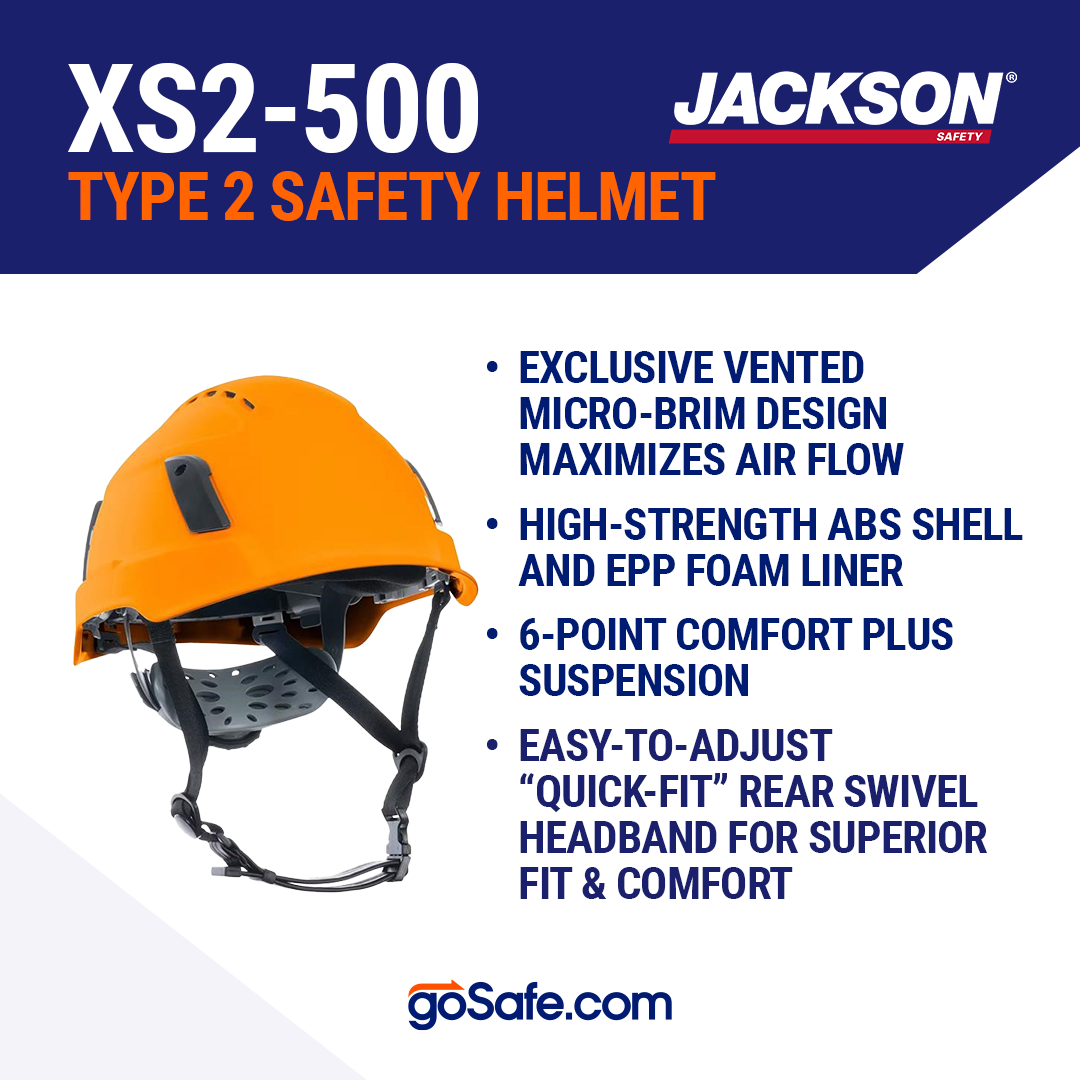
With the rising popularity of modern, climbing-style safety helmets, workers frequently demand vented models to combat heat stress. However, any ventilation slot or hole inherently violates Class G and Class E requirements.
A non-vented shell is strictly mandatory in the following scenarios:
-
Any task where there is a calculated risk of accidental contact with live electrical conductors (NFPA 70E boundaries).
-
Environments featuring high radiant heat, molten metal splash, or ambient sparks, where vents could allow hot particulates or liquid metal to bypass the shell and make direct contact with the scalp.
If electrical or thermal hazards are present, the comfort of ventilation must be sacrificed for the absolute structural barrier of a solid, non-vented shell.
Debate 3: Impact Shields vs. Arc-Rated Shields
Using a heavy-duty ANSI Z87.1 impact-rated polycarbonate face shield during electrical switching is an OSHA citation waiting to happen - and a recipe for severe injury.
Under the intense heat of an arc flash (which can reach 35,000°F), standard polycarbonate shields will instantly ignite, melt onto the worker's face, or shatter under the accompanying pressure blast. Arc-rated shields are specifically formulated with visible light transmitters and thermal absorbers that block the intense infrared and ultraviolet energy while resisting ignition and structural breakdown.
A Step-by-Step Procedural Guide to PPE Selection
To ensure your team is equipped correctly, follow this systematic evaluation process for every environment.
Step 1: Execute the Incident Energy and Voltage Analysis
Before buying gear, consult your facility’s latest electrical engineering study.
-
Identify the nominal voltage of the equipment. If it exceeds 1,000V, a Type I or II, Class E helmet is non-negotiable.
-
Identify the calculated incident energy (expressed in cal/cm2) at the specific working distance. This metric determines your NFPA 70E Arc Flash PPE Category (Categories 1 through 4).
Step 2: Match Head Protection to the Electrical and Physical Hazard
-
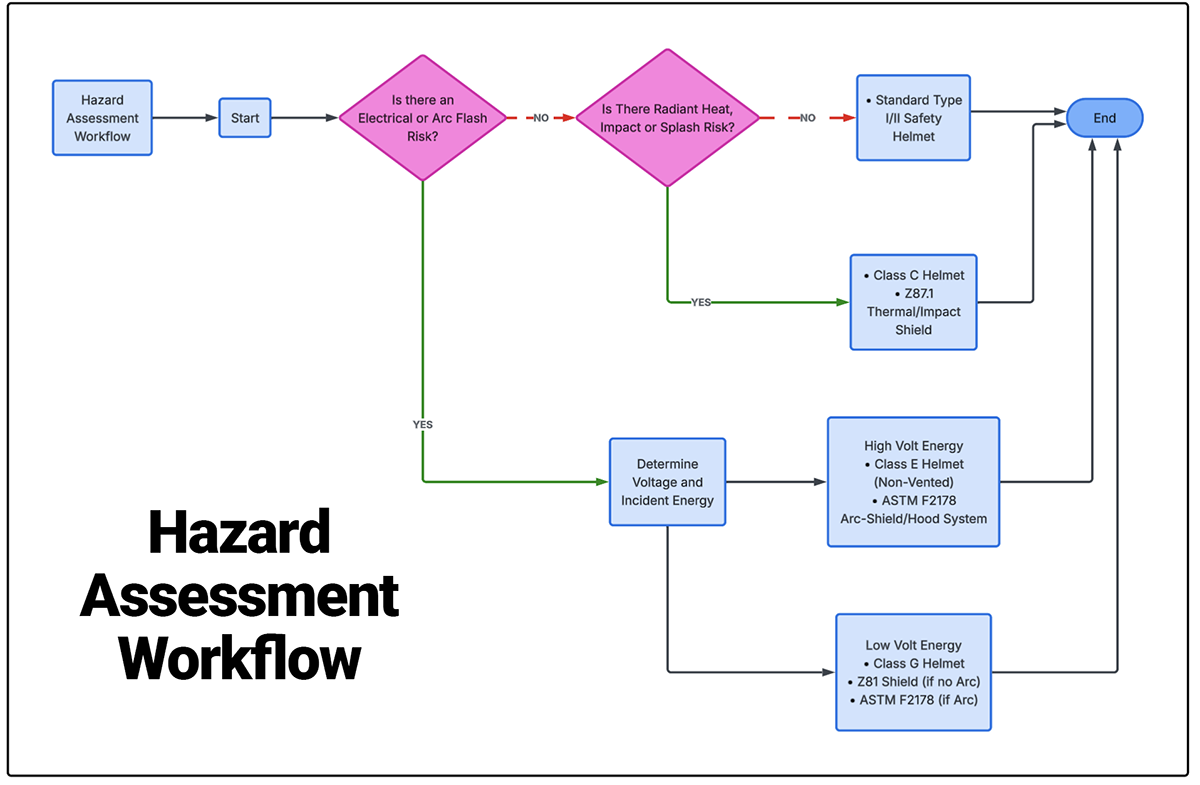
For Low-Risk General Industrial Work (No Electrical Exposures): Select an ANSI Z89.1 Type I or Type II, Class C (vented) helmet for optimal cooling.
-
For General Construction Near Low-Voltage Lines: Select an ANSI Z89.1 Type I, Class G helmet.
-
For Utility Work, Electrical Substations, or Energized Maintenance: Select an ANSI Z89.1 Type I or II, Class E (Non-Vented) helmet.
Safety Note: If the worker is at risk of falling from heights while performing electrical work, opt for a Type II Class E helmet featuring an integrated chin strap to ensure the helmet remains securely in place during a fall event.
Step 3: Select Face Protection Based on the Primary Hazard Dynamics
Scenario A: High-Heat and Molten Metal Environments (Foundries, Glass Manufacturing)
-
The Hazard: Intense radiant heat (IR), flying sparks, and liquid metal splash.
-
The Selection: Choose an ANSI Z87.1 face shield specifically marked for heat resistance (often constructed from specialized acetate or gold-coated polycarbonates that reflect radiant energy). Pair this with a high-heat resistant helmet shell (such as fiberglass or advanced resin compounds) capable of withstanding temperatures exceeding 350°F without warping.
Scenario B: Arc Flash Environments (Electrical Panels, Switchgear)
-
The Hazard: Arc flash thermal energy, concussive blasts, and blinding light.
-
The Selection: Look exclusively for shields certified under ASTM F2178.
-
For NFPA 70E PPE Category 1 or 2 (≤ 8 cal/cm2): An arc-rated face shield attached directly to a Class E hard hat, paired with an arc-rated balaclava, is generally acceptable.
-
For NFPA 70E PPE Category 3 or 4 (> 8 cal/cm2 up to 40 cal/cm2): A full arc flash hood that completely encapsulates the head and face is required. The face shield must be integrated into the hood garment and match or exceed the total system arc rating.
Conclusion
When selecting head and face PPE, generalizations are dangerous. A hard hat that protects against an overhead impact in a warehouse can act as a conductor in an electrical vault. A face shield designed to deflect chemical splashes can melt instantly in front of an electrical arc.
To keep your workforce safe and maintain strict OSHA and NFPA 70E compliance, always verify the labels. Look for ANSI Z89.1 Class E markings when electrical hazards exist, insist on non-vented configurations when working near heat or voltage, and never substitute an ANSI Z87.1 impact shield for an ASTM F2178 arc-rated system. By conducting rigorous hazard assessments and matching your gear to these precise standards, you ensure that your team's most vital lines of defense never fail them.
For more comprehensive information on Head and Face Protection, including Type 1 & II Helmets, Traumatic Brain Injury (TBI), MIPS Technology, and other related topics please CLICK HERE. To visit our Head & Face Protection FAQ page, CLICK HERE.
goSafe offers a wide variety of Head & Face Protection, and we feature an onsite Customization Department that can customize your head protection with your company logo. We also maintain a constant, ready-to-ship supply of FR Clothing and Safety Footwear. For more information on these products or any of our other safety and PPE products, please contact us at sales@gosafe.com.
goSafe: Your Partner in Safety
At goSafe, Safety is our ONLY focus - and we'll partner with you to keep you and your teams safe. We're small enough to handle your local projects, yet large enough to serve national accounts. If safety is your mission, it starts with us.
Watch the video below for more information about goSafe's capabilities.